


The short answer is that midterm elections have not historically derailed long-term stock market returns. As the November 3, 2026 midterm elections approach, headlines about potential policy changes may leave investors wondering how the outcome could affect their portfolios. Election years can bring more attention to Washington, and some short-term volatility, but history suggests investors should be cautious about making decisions based on politics alone.
How Have Stocks Performed in Midterm Election Years?
Since 1933, the S&P 500 has returned an average of 8.6% in midterm election years, compared with 11.6% in presidential election years and 15.9% in non-election years. Midterm years have been the weakest of the three on average, but they have still been positive.
Two difficult years pull that average down; 2002 followed the dot-com bust, and 2008 followed the global financial crisis. Excluding those years, the midterm-year average rises to 10.0%, and the presidential-year average rises to 13.8%, while non-election years remain at 15.9%.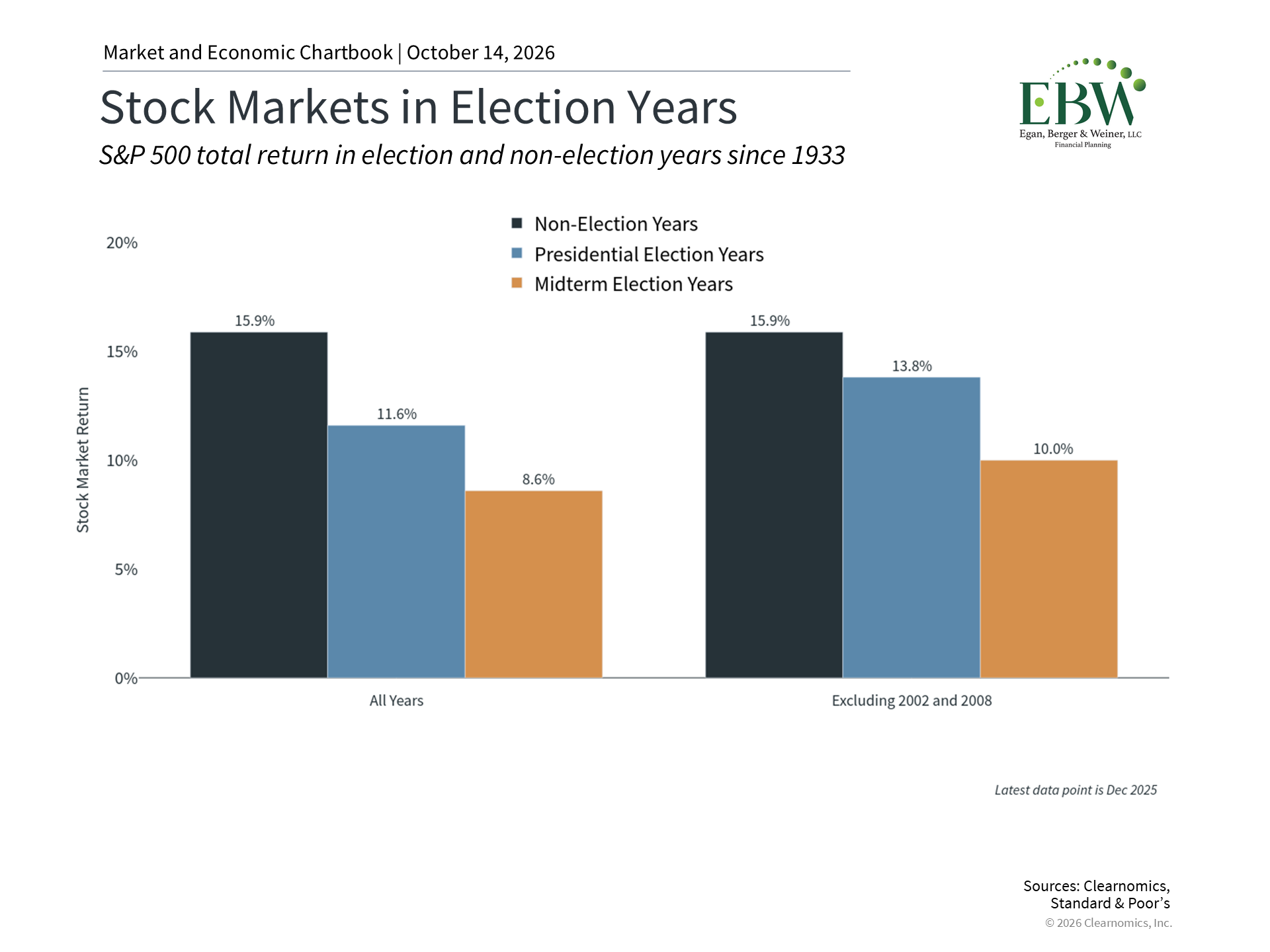
Why do the figures in this article differ slightly?
The two charts in this article come from different sources that measure different periods. The chart above begins in 1933 and splits years into three groups. The chart below begins in 1937 and compares midterm years with all other years combined, which is why its midterm average is 9.2%. Both data sets show the same pattern: midterm years have been positive on average, but below other years.
Why Were 2018 and 2022 Bad Years for Stocks?
The weak markets in 2018 and 2022 were driven mainly by the Federal Reserve raising interest rates to fight inflation, not by the elections themselves. Since 1937, midterm election years have averaged a 9.2% return, compared with 13.3% for non-midterm years. The two most recent midterm years were notable exceptions, returning –4.4% in 2018 and –18.1% in 2022.
Both periods saw significant monetary tightening. In 2022, the Fed undertook its most aggressive rate-hiking cycle since 1981. These broader economic forces remind us that market performance is driven by much more than the political calendar.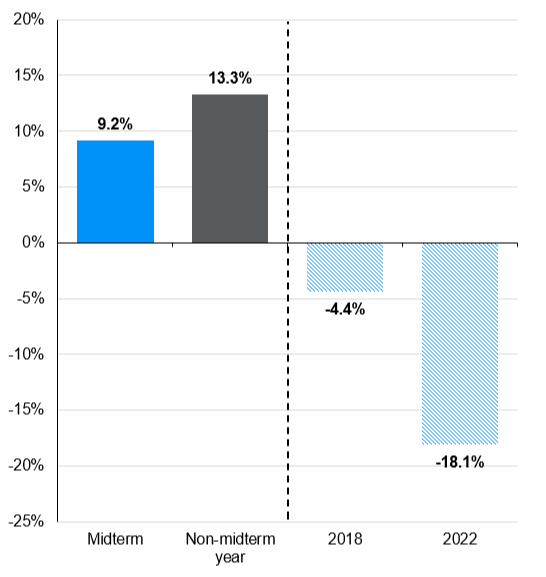
How Should Investors Position Their Portfolios Before the Midterms?
For most long-term investors, the best move before an election is to stick with a well-built plan rather than try to predict how the results will affect stock prices. Instead, focus on the factors you can control:
• Stay diversified across asset classes, sectors, and regions
• Rebalance when appropriate so your portfolio stays aligned with your target mix
• Manage investment costs, which compound over time just like returns
• Keep an appropriate level of risk for your goals and time horizon
• Avoid market timing. Reacting emotionally to political headlines can make it harder to stay on track toward important financial goals
Elections are just one of many influences on financial markets. Economic growth, corporate earnings, interest rates, inflation, and investor expectations all play important roles. Historical returns cannot guarantee future results, but they reinforce an important lesson: a disciplined investment strategy built around your financial goals and time horizon is generally more productive than trying to anticipate every political or market development.
Frequently Asked Questions:
Are midterm election years bad for the stock market?
Not on average. The S&P 500 has posted positive average returns in midterm election years since the 1930s: about 8.6% to 9.2%, depending on the data source and starting year. That is lower than in other years, and some midterm years such as 2018 and 2022 have been negative.
Should I sell my investments before the midterm elections?
Generally, no. Moving in and out of the market around elections means you have to be right twice about when to get out and when to get back in. For most long-term investors, staying with a diversified plan and rebalancing as needed has historically been more effective.
Does it matter which party wins the midterms?
Markets have experienced both gains and losses under many different combinations of party control in Washington. Economic conditions, corporate earnings, and interest rates have tended to matter more for returns than which party holds power.
What has a bigger impact on stock returns than elections?
Economic growth, corporate earnings, interest rates, inflation, and investor expectations. For example, the losses in 2018 and 2022 were closely tied to Federal Reserve rate hikes rather than election results.
For investors, it’s best to maintain a long-term perspective aligned with financial goals.
If you have any questions or concerns about your specific situation, don’t hesitate to reach out to your advisor at EBW.